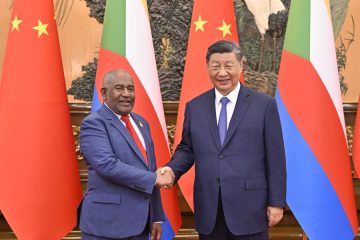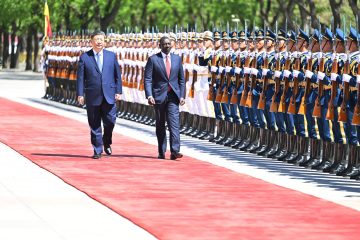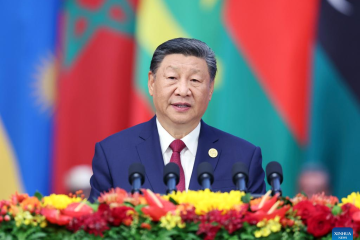
While China’s support around the world has been associated with large-scale infrastructure projects, recent trends reveal a growing emphasis on smaller, community-focused initiatives, now referred to as Xiao Er Mei (“Small and Beautiful Projects”), different to the earlier version of Chinese aid and investment, which President Xi repeatedly called Projects of the Century, or simply put, “mega projects.” In Uganda’s healthcare sector, China’s presence, while under-explored remains significant. What we see could fit perfectly within the new Xiao Er Mei concept. At the same time, Uganda’s experience highlights the contradictions in China’s development posture, especially in light of its support for other mega environmentally and socially contentious projects like the East African Crude Oil Pipeline (EACOP).
China’s involvement in Uganda’s health sector remains an under-explored yet significant dimension of the broader Sino-Ugandan relationship. While much attention has been directed toward large-scale infrastructure projects under the Belt and Road Initiative (BRI), China’s contributions to Uganda’s healthcare system—particularly through medical diplomacy, infrastructure support, and public health outreach, reflect a quieter but fruitful form of cooperation.
Uganda’s health sector continues to grapple with systemic challenges. Public health expenditure remains relatively low, with less than 5% of the national GDP allocated to the health budget (2022 est.). The country’s health indicators, while improving, still reflect significant gaps: the maternal mortality ratio stands at 284 deaths per 100,000 live births (2020), and the average life expectancy is estimated at just 69.7 years (2024). Malaria remains the leading cause of morbidity and mortality, infecting approximately 12.6 million people in 2023, with 15,945 reported deaths that year.
One of the most notable Chinese contributions is the China-Uganda Friendship Hospital Naguru (CUFH-N), a facility handed over by the Chinese government in 2012 as an $8 million gift. As one of only four national referral hospitals in Uganda, CUFH-N plays a vital role in the delivery of healthcare services, second only to Mulago National Referral Hospital. Despite its limited capacity—100 beds and severe shortages in equipment and staff, the hospital manages an impressive patient load. In 2024, for example, hospital administrators reported delivering between 800 and 900 mothers per month, with only six delivery beds and eight functional incubators. Although constrained, the facility represents a significant and symbolic gesture of goodwill and development cooperation.
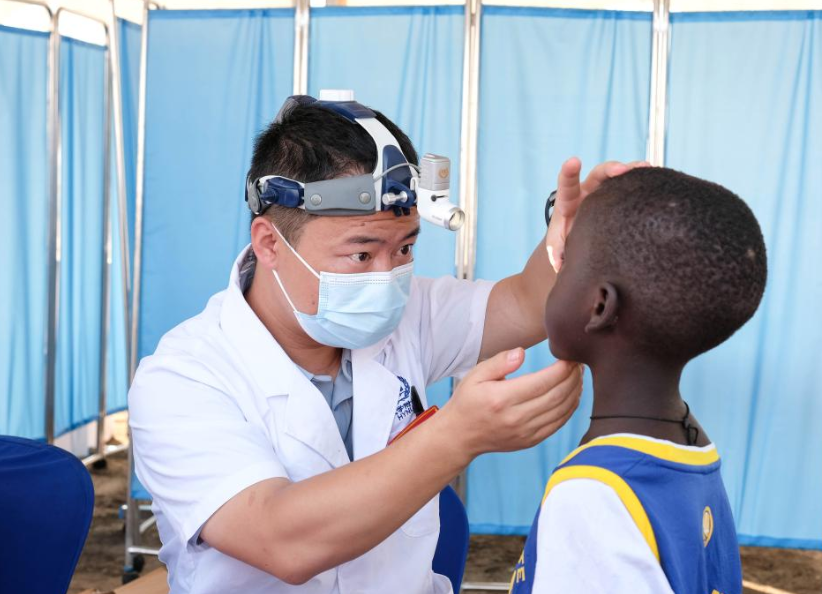
In addition to infrastructure support, China has maintained a long-standing commitment to human resource development through the Chinese Medical Teams (CMTs) program. Since its inception in Uganda in 1983, the CMT initiative has provided specialized medical personnel, supported local hospitals, and trained Ugandan health workers. Operating primarily from CUFH-N, Chinese doctors and specialists have expanded outreach services to some of Uganda’s most underserved regions. For instance, just this June, a team of Chinese cardiologists, pediatricians, general surgeons, acupuncture specialists, and public health experts were joined by 20 Ugandan medical professionals to conduct a medical camp in Kikuube District, a remote area bordering the conflict-affected eastern Democratic Republic of the Congo (DRC).
Moreover, China has introduced aspects of Traditional Chinese Medicine (TCM)—including herbal treatments, acupuncture, moxibustion, and non-pharmaceutical therapies—into its overseas health cooperation frameworks. TCM is highly regarded today and being fast incorporated into Western health systems.
Importantly, China’s health engagement in Uganda aligns with a broader recalibration of its global development finance strategy. In contrast to the earlier emphasis on “mega-projects” such as roads, railways, bridges, and dams—often dubbed “projects of the century”—Beijing is increasingly choosing what it now terms “Small and Beautiful Projects” (小而美, Xiao Er Mei). According to experts, Xiao Er Mei projects are typically valued at under US$50 million, must align with the national development priorities of the recipient country, be technically and financially feasible, and conform to global climate and environmental sustainability standards. These smaller-scale, targeted interventions, such as the support to Uganda’s health sector, are designed to be cost-effective, community-focused, and “more impactful.”
After nearly a decade of negotiations to secure financing for the Standard Gauge Railway (SGR), linking Uganda’s capital, Kampala, to the eastern border town of Malaba on the Kenyan frontier, China eventually declined to fund the project. This decision reflects a broader shift in Beijing’s development financing strategy—moving away from large-scale infrastructure investments toward smaller, more targeted initiatives under the “Xiao Er Mei” framework.
In this context, China’s medical assistance to Uganda should not be viewed as peripheral, but rather as an essential pillar of its evolving Chinese development cooperation model. At a time when global attention to health equity and pandemic preparedness is growing, China’s continued support provides not only technical and humanitarian relief but also strengthens its diplomatic and strategic foothold in Uganda and the East African region. While the Xiao Er Mei concept has become increasingly visible in Uganda and across the broader East African region, notable exceptions to this trend persist. Most prominently, Beijing is now regarded as the principal financial and political lifeline of the highly controversial East African Crude Oil Pipeline (EACOP). This multibillion-dollar fossil fuel infrastructure project has attracted widespread criticism and international boycotts—particularly from Western governments, civil society actors, and environmental advocacy groups—due to its projected adverse impacts on human rights and the environment. Despite this global outcry, China appears willing to support what many observers have labeled a “dirty project,” signaling that its development engagement in Africa is still shaped by a complex interplay of strategic interests beyond the Xiao Er Mei model.