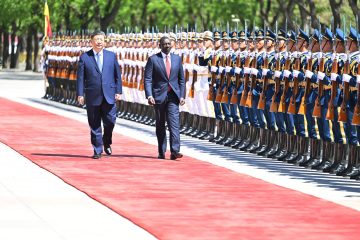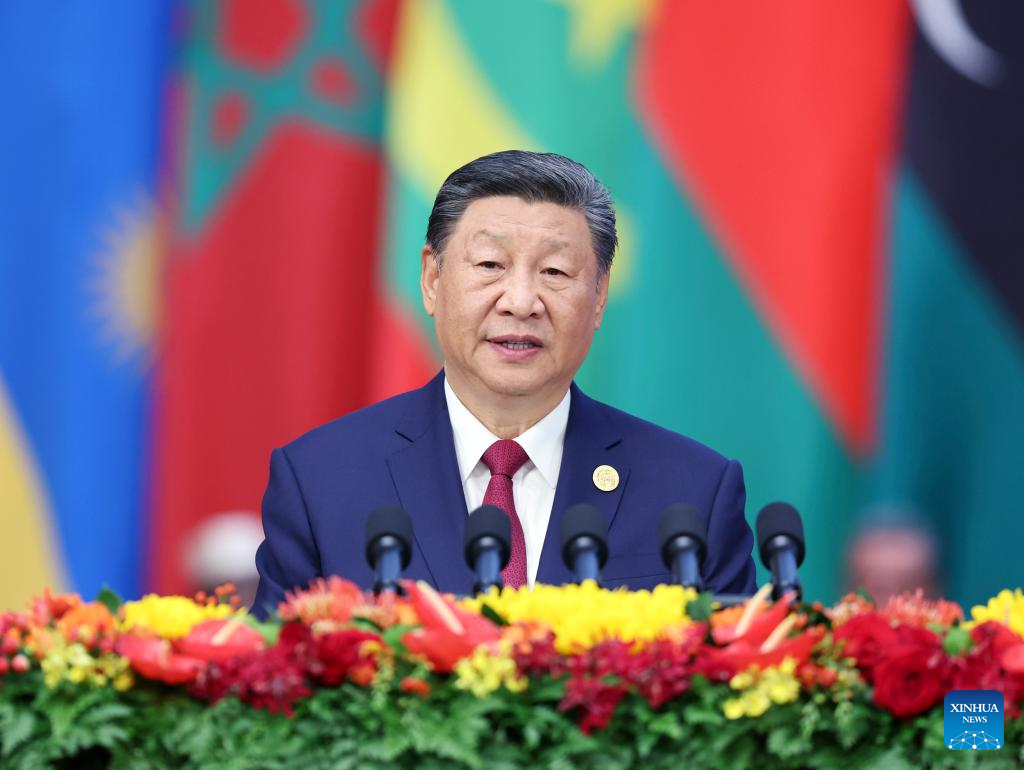
This year’s Forum on China-Africa Cooperation (FOCAC), themed “Joining Hands to Advance Modernization and Build a Community with a Shared Future,” took place in a period marked by global challenges, including shifting geopolitical alliances, climate change, and the ongoing economic recovery from the COVID-19 pandemic. As the first fully in-person FOCAC since the pandemic, following the 2021 summit held in Dakar, Senegal, there were heightened expectations for significant outcomes.
The summit unfolded against the backdrop of political instability in Africa, particularly in the Sahel region, where nine coups have occurred, leading to military juntas ruling in Sudan, Burkina Faso, Chad, Guinea, Mali, Niger, and Gabon. This wave of coups, described by UN Secretary General Antonio Guterres as the “coup belt,” has resulted in strained relations between these countries and Western powers, particularly former colonial rulers like France. The expulsion of American forces from Niger reflects the rapid geopolitical shifts taking place in the region. Meanwhile, security concerns continue to escalate in Somalia, the Democratic Republic of Congo, South Sudan, Sudan, Nigeria, Burkina Faso, and Senegal.
In Nigeria, widespread protests against economic hardships have shaken the country, even as President Tinubu traveled to Beijing on an official visit. Similarly, Kenya has experienced protests over proposed new taxes, leaving President Ruto facing domestic unrest. Uganda is looking to China to finance its controversial East African Crude Oil Pipeline (EACOP) project, which will be the world’s longest thermal-powered pipeline, in anticipation of beginning oil production in 2025. Kenya, on the other hand, is in dire need of US$1 billion to complete the final leg of its Standard Gauge Railway (SGR) to the Ugandan border, even as China has refused to fund Uganda’s portion of the railway from the Kenyan border to Kampala. In addition, Kenya expects to negotiate loan restructuring and request for more time from China. Several African countries, including Ethiopia, Zambia, and Angola, are heavily indebted to China and were likely eager to discuss debt relief and the cancellation of interest-free loans that are nearing maturity, as has been the tradition at FOCAC summits.
Military juntas in West Africa, having distanced themselves from the West, are increasingly seeking support from Russia and China. Despite these challenges, China remains Africa’s largest trading partner and bilateral lender, primarily through its Belt and Road Initiative (BRI), but recent years have seen Beijing extending its engagement beyond economic investments to peace and security efforts.
China is not without its own difficulties. Rising youth unemployment and a looming crisis in the real estate sector have presented domestic challenges, while security tensions continue to rise in the South China Sea and the wider Indo-Pacific region. The war in Ukraine has also reached a critical juncture, and new conflicts are emerging in West Asia, where the Israeli war in Gaza, alongside the involvement of Houthi rebels in Syria and Hezbollah in Lebanon, threatens global trade routes that Africa relies on.
One of the key takeaways from this year’s FOCAC is China’s pledge of a total of US$50.7 billion over the next three years, including US$30 billion in credit lines, US$11.27 billion in various forms of assistance, and US$9.9 billion for investment. Beijing has also shown a commitment to skills development, promising to train 7,500 military personnel, police, and young African military leaders, in addition to offering 1,000 political party elites and agricultural sector exchanges. Despite this, China is increasingly focused on smaller-scale projects, while African nations continue to seek larger financial commitments.
This panel brings together academics, industry leaders, and civil society organization (CSO) representatives to critically examine the recent FOCAC summit, its promises, feasibility, and how it has been received across the African continent. The session will consist of a panel discussion followed by a question-and-answer segment to offer attendees an opportunity to engage with experts in the China-Africa field. We welcome all interested individuals to register by completing the form by September 25, 2024, at 5:00 pm EAT (Kampala Time) to attend the session on September 30.
For further inquiries, please feel free to contact jodota@chinauganda.org. We look forward to your participation in what promises to be an enlightening and engaging event.
*End*