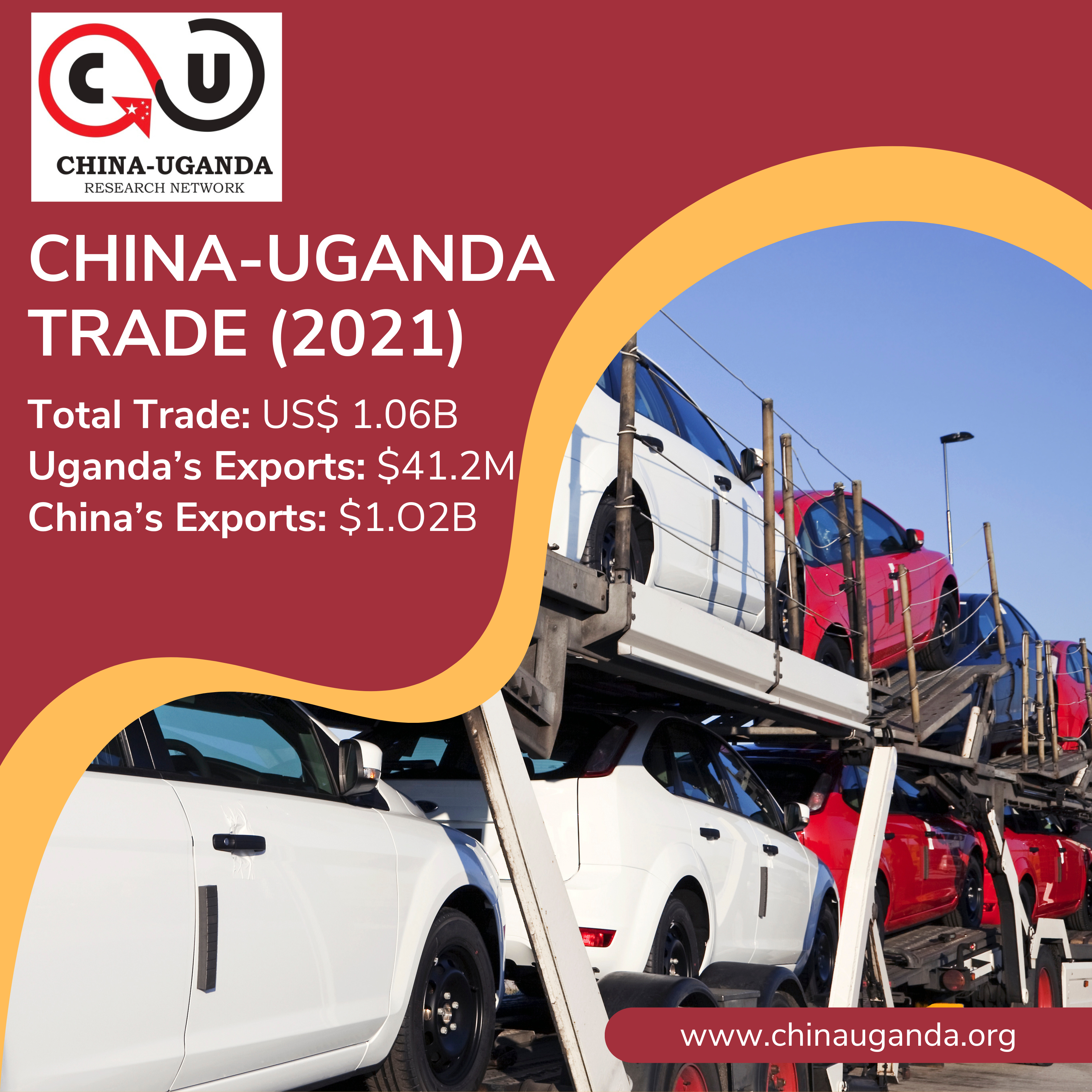
By Joshua Mugambwa and Davis Ampereza
Entebbe Expressway
Uganda’s Third National Development Plan (NDP III) has “Sustainable Industrialization for inclusive growth, employment and sustainable wealth creation” as its theme. The NDP III takes sustainable development agenda as a key focus spelling out the priority sectors that need strategic intervention for Uganda’s consistent development process. Among the priority sectors are; leveraging advances in ICT for Development, manufacturing, Increase public investment in priority mineral exploration and processing, investment in R & D in key priority sectors like; agriculture, Oil & Gas, Energy, Health, Transport; increasing access to and use of finance, Improve the transportation and logistics infrastructure. Uganda’s vision 2040 aspires strengthening the fundamentals of the economy to harness the abundant opportunities around the country so as to become a competitive upper middle-income status country. The East African Community (EAC) Vision 2050 aims at optimizing the utilisation of its resources to accelerate productivity and social wellbeing of its people. On the other hand, Africa’s development agenda 2063 aims to to achieve inclusive and sustainable socio-economic development. In all aspects, the development agendas are forward looking and therefore need international cooperation for their realization.
While Uganda aspires to get to middle income country status, it’s still limited by challenges. Uganda’s development challenges include unemployment, subsistence economy, high cots of electricity, income inequality, and dwindling local revenues insufficient to fund local service delivery among others. Progressive development of priority sectors in Uganda will facilitate job creation and production for both the domestic and international markets, better infrastructure, increased quality of life, increases tax revenue, and attracts investment
Under the auspices South-South Cooperation, collaboration between Uganda and other developing and emerging economies is critical to its development. For example, between 2000 and 2014, 91% of Chinese support came in the form of loans (81%) and grants (10%) to support infrastructure development projects, some of which were core projects under NDPII. It is therefore important that South-south cooperation financing is directly relevant for the NDPIII financing envelope.
China has emerged as a key player in Uganda’s economic development. The country has invested heavily in infrastructure projects, provided significant loans and grants, and facilitated the development of key sectors such as energy and industry. China has played a very important role towards Uganda’s economic development and there are different strategies and approaches that have led to success so far as well as benefits of these engagements.
China-Uganda relations dates back to 1960s before Uganda gained her independence from Britain. Since then, China has been actively involved in Uganda’s economic development largely through trade. Initially, this partnership focused on agriculture, trade and infrastructure projects, with China investing heavily in the construction of roads, bridges, and other key transportation networks. One notable example is the Kampala-Entebbe Expressway, a 51-kilometer highway linking the capital city to its international airport.
Gulu-Olwiyo-Acholibur-Kitgum-Musingo Highway
The construction of roads by Chinese companies is spurring growth, regional trade and development in northern Uganda, a region recovering from two decades of the Lord’s Resistance Army insurgency. The newly constructed roads include the 225 kilometer Gulu-Olwiyo-Acholibur-Kitgum-Musingo which has opened up the once insurgency wrecked areas to the northern Uganda regional commercial hub, Gulu City. Gulu, the regional hub which lies approximately 336.3 kilometers north of the capital Kampala now has a new look after a facelift from China Railway 18th Bureau Group and Chongqing International Construction Corporation (CICO) upgraded the dusty narrow roads from gravel to an asphalt surface layer.
The China Railway 18th Bureau Group and Chongqing International Construction Corporation (CICO), using UGX83 billion ($23.4 million) World Bank funds for Support to Municipal Infrastructure Development (USMID) have constructed 34 roads, a carriage way of seven meters with two lanes in opposite directions, parking lanes, a cycle lane and walkways, installed street lights, service ducts and drainage channels giving it a fresh look befitting a city.
The improved road network has attracted new businesses and traders, and made Gulu city the commercial hub of northern Uganda. Traders come from as far as Juba in South Sudan to get supplies from Gulu because of the improved road network. Hotels, street coffee cafes and restaurants are some of the new businesses that have cropped up in Gulu city as a result of tarmacking and beautifying of the streets.
Gulu-Atiak Road
The Gulu-Atiak road constructed by China Henan International Corporation (CHICO) and Wuju Group Corporation at a cost of US$102 million has opened up northern Uganda to trade with South Sudan.
China in Uganda’s Energy sector
China has also played a major role in Uganda’s energy sector. The country has been grappling with power shortages for decades, which have limited economic growth and development. Chinese investments in hydroelectric power plants, transmission lines, and grid upgrades have helped to address this problem. One of the notable examples is the Karuma Hydroelectric Power Station, which has a capacity of 600 megawatts and is being constructed by Chinese company Sinohydro. The project is expected to significantly increase Uganda’s power generation capacity and reduce the country’s reliance on expensive imported fuels.
China in Uganda’s telecommunications sector
Apart from infrastructure and energy, China has also invested significantly in Uganda’s telecommunications sector. The country has been expanding its broadband connectivity and upgrading its digital infrastructure rapidly, with Chinese firms such as Huawei at the forefront of this development. Uganda has also signed agreements with China on the development of a national data center, which will help to consolidate the country’s digital infrastructure and enable it to better harness the benefits of the digital economy.
Entebbe International Airport expansion project.
One notable case study in China-Uganda economic relations is the Entebbe International Airport expansion project. In December 2020, the airport unveiled its newly completed $200 million expansion, which was largely funded by the Export-Import Bank of China. The project involved the construction of a new terminal building capable of handling up to 5 million passengers annually, as well as numerous upgrades to existing facilities. This project is credited for creating over 1,500 jobs for Ugandans, while also facilitating greater connectivity and tourism opportunities for the country. In an interview with CGTN Africa, Works and Transport minister, Gen. Edward Katumba Wamala, praised China’s involvement in this project, noting that “the Chinese are not only investing in hard infrastructure, but also in soft infrastructure, which is a great catalyst for our economic development.”
The project will be executed in three phases in a period of 20 years, said Vianney Luggya, CAA’s communications boss, adding that that the new cargo area that is 300 by 400 meters in size will be able to enable heavier output in the cargo business of up to 100,000 metric tons of cargo every year and also host bigger cargo jets.
The first phase of the project involves the expansion of its main runway, construction of runway-end safety area at both ends, construction of two exit taxiways, one rapid exit taxiway and a take-off bay, helicopter apron, vehicle access control road to the airport and pavement of perimeter road, he explained.
If we analyze all sectors, China is playing a critical role in Uganda’s economic development. China’s investments in infrastructure, energy, and telecommunications have helped to address key development challenges and unlock new opportunities for growth and prosperity. However, there is also a need to be cautious about the extent to which China’s involvement in Uganda’s development agenda is sustainable and aligned with the country’s long-term needs and aspirations.
Way forward
For Uganda to maximize relations with China, it needs to adopt a holistic approach that goes beyond infrastructure, energy, agriculture, and manufacturing. This means diversifying its partnerships with China to include sectors such as tourism, health and education. While China has also been supporting Uganda’s health sector especially through its visiting medical teams, this sector can further be strengthened. In addition, Uganda should prioritize skills transfer and capacity building to ensure that Chinese investments are catalytic. This can be achieved through the establishment of joint training programs, technology transfer agreements, and collaboration between academic and research institutions. While China is already providing thousands of trainings and scholarships, this is an area that can be improved by offering more opportunities.
Uganda’s National Development Plan (NDP III) provides a useful guide for this approach, as it emphasizes a focus on promoting industrialization, job creation, and export diversification. The plan highlights key sectors that are critical for driving economic growth, such as agriculture, tourism, and manufacturing. Uganda needs to leverage these sectors and ensure that Chinese investments align with its own development priorities. With the many Chinese led industrial parks such as Kapeeka and Mbale, this will not be hard to achieve.
Opportunities with Uganda -China cooperation
The cooperation between Uganda and China are textbook example of a win-win cooperation promoted by Chinese president, Xi Jinping. For example; For Uganda, the partnership with China provides a critical source of funding for key development projects that would otherwise be difficult to finance. It also facilitates the transfer of technology and skills, which in turn can contribute to long-term economic growth and diversification. Additionally, the partnership can help to position Uganda as a key player in regional integration and cooperation, which is critical for unlocking new opportunities for trade and investment.
For China, investments in Uganda represent an opportunity to expand its footprint in Africa and access new markets for its products and services. It also provides a way to diversify its own economic interests and reduce its dependence on traditional western markets.
In conclusion, China has played a critical role in Uganda’s economic development. The partnership has focused on infrastructure, energy, agriculture, industrialization and telecommunications which are key in addressing key development challenges and unlocked new opportunities for growth and prosperity. The construction of roads by Chinese companies is spurring growth, regional trade and development in northern Uganda, a region recovering from two decades of the Lord’s Resistance Army insurgency.